
How to Find a Northumberland County Property Owner
Ownership research in Northumberland County starts with the Commissioner of Revenue's ConciseCAMA system. Enter a 911 address or an owner name. Open the likely parcel. Copy the map number, legal description, and assessment date from the property card. Next, turn to the latest deed in Virginia Circuit Court SRA. It shows who actually received the interest. A recent closing can fall after the assessment snapshot. The Clerk's recorded deed may therefore be newer than the roll.
When the grantee is an entity, run the exact legal name through the Virginia SCC Clerk's Information System. A registered agent or principal-office entry may explain a company name. It rarely reveals every beneficial owner, though. Stay focused on the recorded party and parcel. Verify the legal description at each step of the property records search.
- Search ConciseCAMA by the parcel's current 911 address, owner name or map-number controls.
- Copy the roll owner, mailing address, legal description, map number and date shown.
- Search the Circuit Clerk's deed index for the latest conveyance and compare the grantee and legal description.
- For an LLC or corporation, check the exact entity name in SCC records and treat the registered agent as a contact, not automatic proof of ownership.
The Northumberland CAMA Owner Field
ConciseCAMA is the county's assessment and ownership reference. Its dates matter. The disclaimer states that displayed ownership and assessment data reflect December 31, 2025. The portal separately posts an update line showing September 12, 2026. The two figures are not interchangeable. Record both, and ask the Commissioner of the Revenue whether a later conveyance has reached the roll.
The property card varies by parcel. Owner labels and co-owner fields can appear differently from one record to the next. A card may show situs and mailing addresses, the map number, values, the assessment date, the legal description, and sale details. Check the selected parcel directly. The Commissioner's office remains the authority for any correction. See the ConciseCAMA real-estate search and its data disclaimer.
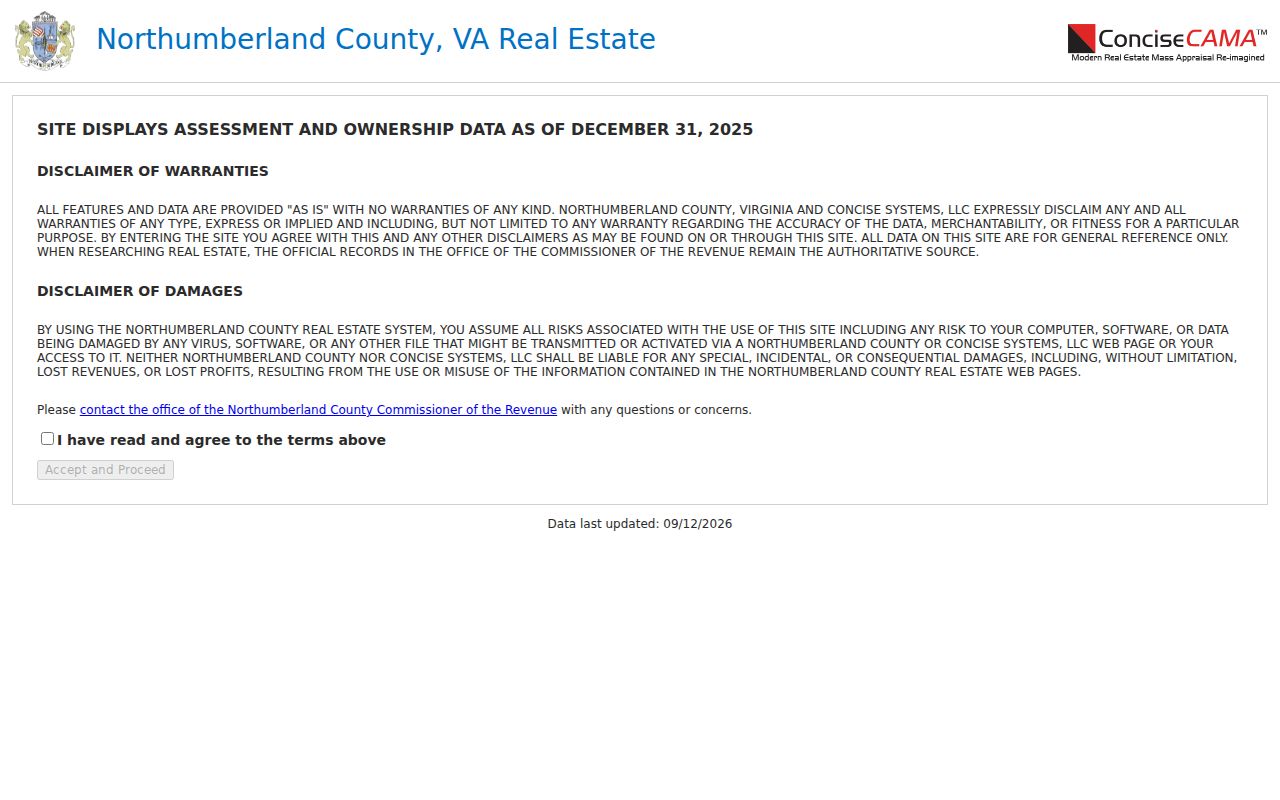
Confirm the owner name against a recorded deed.
Mailing and Situs in Northumberland County
Situs is the parcel's location. The mailing address is where tax mail goes. Those can sit far apart. A mailing address may belong to an owner elsewhere. It may instead name an attorney, a fiduciary, an LLC's office, or another tax-bill destination. It can help distinguish two same-name owners, yet it proves neither residence nor possession.
Postal names like Heathsville or Reedville can appear in an address. That does not create a separate city property-record jurisdiction. Resolve any match with the map number and legal description. Check both fields on every Northumberland County parcel. Never assume a mailing city or ZIP marks the property's legal location.
Where Northumberland County Owner Information Appears
Several Northumberland County records can name an owner, but they serve different purposes. The Commissioner roll is the quick route to an assessment account. The Circuit Clerk deed records the conveyance itself. GIS maps and state entity records round out the picture, placing the parcel on the ground and clarifying a legal organization named in a deed.
| Source | Owner Info It Gives | Access |
|---|---|---|
| Commissioner roll | Assessment owner, mailing address and parcel key | ConciseCAMA; confirm with office |
| Circuit Clerk deed index | Parties to a recorded conveyance | SRA or clerk request |
| Virginia SCC CIS | Entity name, registered agent and filings | Public entity search |
| Interactive GIS | Parcel geography and a map reference | Public viewer; data as is |
An owner of record is whoever the relevant Northumberland County record names. That name does not prove who occupies the property today. The roll and the deed can also differ in timing. Compare the recording date with the assessment snapshot before deciding which entry is newer.
Confirming the Northumberland Deed
Start with the map number and legal description from the Northumberland County assessment roll to locate a matching deed. Search the latest grantee name in SRA. Open the deed when access permits. Then compare grantor, recording date, and tract description. A deed may vest title jointly or in an entity, so copy the exact grantee wording rather than shortening the name.
Book and page, or the instrument number, are the Clerk's copy identifiers. Keep them handy. If the online image is unavailable, the Circuit Court Clerk can help identify a land record by owner name and property detail. After a sale, the newest recorded instrument may be more current than the roll. That lag matters. Ask the Clerk about a copy when the index alone leaves questions.
In SRA, choose the Northumberland Circuit Court land-record collection. Search the party index, not the statewide landing page. An index entry can identify the grantor, grantee, instrument type, date, and recording reference. The full image may need the access method the portal notes. Match the document's land description before assuming a same-name grantee acquired the parcel in question. A release, deed of trust, or correction can follow a conveyance without changing who holds title. Read the granting language closely.
Virginia's SRA land-record portal is the search path. The County copy-request page explains what references to supply.
LLC and Trust Names on a Northumberland Deed
Plenty of Northumberland deeds skip the individual entirely. The grantee line may carry a corporation. It may also list an LLC, a trustee, or a fiduciary acting for an estate. Search the name exactly as the recorder wrote it. A stray comma or abbreviation can hide the entry. The Virginia SCC CIS can then show the entity's status. It also displays the registered agent, principal office, and filing history.
That filing record has limits. It identifies the organization and its registered contact. It does not show the people who actually benefit from the property. When the grantee is a trust or an estate, the deed itself may name a trustee, executor, or administrator. The related probate file may name one too. Tie that entity or fiduciary name back to the deed. Tie it back to the map number for the parcel as well. Never treat a registered office or tax-mail address as a natural person's residence.
Use the entity screen to read the legal name behind an LLC or trust.
Then return to the Clerk's deed for the actual land transfer in Northumberland County.
Estate Transfers and Northumberland Owners
Death changes the paper trail on a Northumberland parcel. The land record may now include a will. It may also include the qualification of a fiduciary, probate orders, and an executor's or administrator's deed. Start by searching the decedent as both grantor and grantee. Then check under the estate and fiduciary names too. The Circuit Court Clerk keeps public wills and fiduciary records. The Library of Virginia catalog lists estate papers from 1761 through 1950 along with fiduciary indexes and books.
One caution matters here. A death certificate is not a conveyance. The probate order and the deed are the records that show authority. They also move the parcel. If a vital record is needed to connect family names, Virginia's access periods apply. Deaths become public after 25 years. Earlier certificates carry eligibility and identification rules.
How Recent Is a Northumberland Owner Record?
Freshness is the hard part of any Northumberland County owner lookup. ConciseCAMA states an ownership snapshot of December 31, 2025. It also posts a separate data-update line dated September 12, 2026. No fixed update delay is published beyond that. A newer portal refresh proves little. It cannot show that a sale recorded after the effective date has reached the tax roll.
For a recent closing, read the latest deed in the Clerk's index. Ask the Commissioner whether the assessment record reflects the sale. Keep the deed recording date and the CAMA date distinct in your notes. The detailed current owner lookup explains how to compare those sources. It does so without rebuilding the backward chain.
Privacy Limits on Owner Information
Virginia's Address Confidentiality Program gives eligible participants a substitute address. A tax-mail address is a parcel clue. Never try to reverse that protection through an assessment mailing address, a voter record, or a directory search. That is not allowed. It is not permission to expose or contact a protected person outside a lawful property matter.
Statute restricts some records outright. VERIS voter files are not public under Code §24.2-404(B). Military discharge records are confidential. Public property data still needs context. An LLC, trust, fiduciary, or mailing agent may stand in for the person who benefits from the land. The Virginia Address Confidentiality Program page explains the substitute-address program in full.
The Virginia Department of Elections Citizen Portal covers election services and voter records. Those files follow access rules separate from property ownership records in Northumberland County.
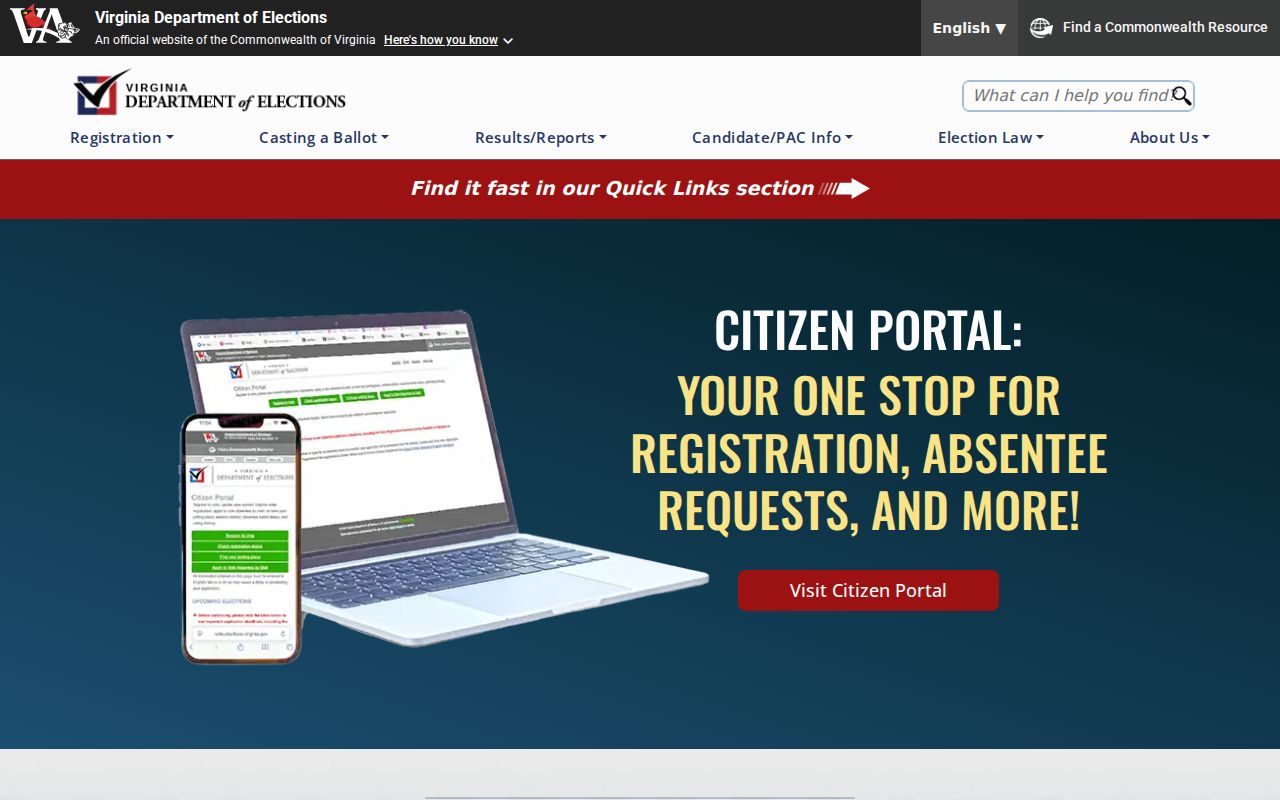
A voter portal result proves neither ownership nor any authority to identify an occupant. For parcel questions in Northumberland County, rely on deeds and assessment records instead.
Limits of a Northumberland County Owner Lookup
A name alone proves little in Northumberland County. An owner of record may not occupy the parcel. He or she may not live there or make its day-to-day decisions. An assessment entry is not a title search. A single deed index result is only one link in the chain. Compare legal descriptions and every relevant instrument before treating a name as proof of ownership.
Lawful use. Use Northumberland County owner information for property due diligence, estate work and civic research. Do not use names, mailing addresses or deed details to stalk, threaten or harass anyone.